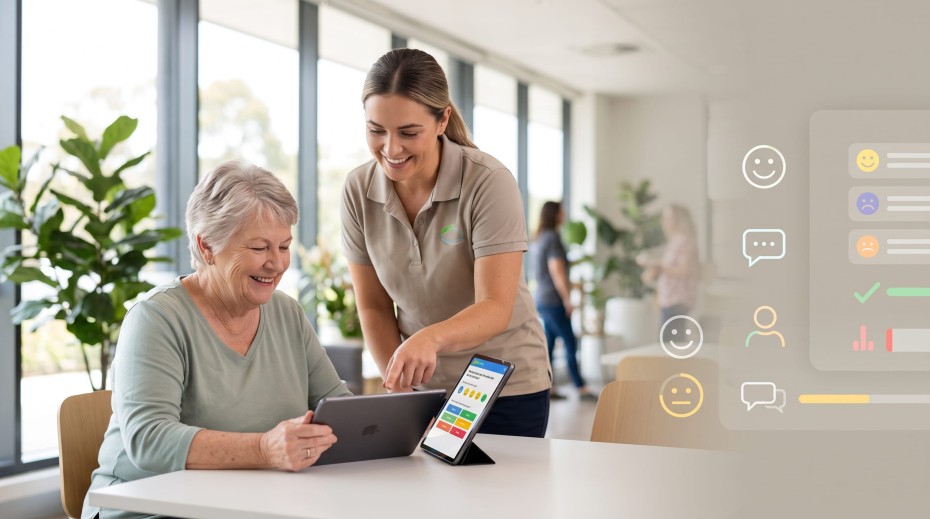
For not-for-profits delivering services under the NDIS, quality is measured in the daily experience of participants. Did a support arrive on time? Did a person feel heard? Did the service help someone move closer to their own goals? These are the questions that define good delivery, and they are answered most reliably by the participants themselves.
Survey data gives organisations a structured way to ask those questions and act on the answers. Gathered thoughtfully and often, participant feedback becomes a steady signal about what is working on the frontline and what needs to change. The right NDIS survey tools make that signal easy to collect, easy to understand and, most importantly, easy to act on.
This is not about measuring for a report that sits on a shelf. It is about building participant voice into the way services are shaped, day to day, in line with the choice and control the scheme is built around.
Why participant voice sits at the centre
The NDIS is grounded in the principle that participants should have choice and control over the supports they receive. That principle only holds if participants have real, regular opportunities to say what is working and what is not. Feedback that is invited, listened to and acted on is one of the clearest expressions of choice and control in practice.
Structured feedback also protects against a quiet risk in service delivery: assuming you already know what participants think. Frontline teams work hard and care deeply, yet even the most attuned staff can miss patterns that only emerge when many voices are gathered together. Good survey software turns individual impressions into a picture the whole organisation can see and discuss.
Listening across the service journey
A single annual satisfaction survey rarely captures the experience of a support relationship that unfolds over months or years. Participant experience is better understood as a journey with several moments worth listening at.
- Onboarding and early support, when first impressions shape trust and set expectations.
- The ongoing rhythm of delivery, where short, regular check-ins surface issues before they grow.
- Points of change, such as a new support worker, a plan review or a shift in goals.
- Moments of transition or exit, which reveal what helped and what could have been better.
Mapping feedback to these moments gives a fuller, more honest view than any one-off measure. NDIS survey tools that support short pulse-style check-ins alongside deeper periodic surveys let organisations listen at the right cadence without overwhelming participants or staff.
From feedback to frontline change
Collecting feedback is the easy part. The value comes from closing the loop, which means turning what participants say into visible change and then telling them what changed as a result. Every survey that leads nowhere teaches participants that their input is a formality, and the next survey pays for it in lower response and candour.
Closing the loop well tends to involve a few consistent habits:
- Share results back with teams honestly, including the findings that are uncomfortable to read.
- Prioritise a small number of improvements rather than promising to fix everything at once.
- Give each change a clear owner and a realistic timeline.
- Report back to participants on what moved because they spoke up.
This is where reporting features matter. Real-time dashboards let service managers see their own team's results without waiting on a central report, and segmentation by service type, location or support category shows where to focus first. NDIS survey tools that connect to platforms such as Power BI or Excel let quality teams look deeper when a pattern needs investigating. The point of good survey software here is not more data. It is faster, fairer decisions about frontline delivery.
Designing for every participant
Feedback only reflects the community a service supports if every participant can actually take part. Many people accessing NDIS-funded supports have communication needs, sensory or cognitive differences, or rely on assistive technology, so accessibility is not an optional refinement. It is what makes the data representative.
Accessible, WCAG-aligned design covers the essentials: compatibility with screen readers, full keyboard navigation, sufficient colour contrast, plain language and clear error messages. Alternatives such as read-aloud options, proxy or supported responses where appropriate, and mobile-friendly formats extend participation further. NDIS survey tools built with accessibility at their core help ensure that the participants whose voices are easiest to overlook are counted, not quietly excluded. Well-designed survey software should make inclusive design the default rather than an extra step.
Handling sensitive feedback responsibly
Feedback from NDIS participants can touch on health, disability, personal circumstances and the quality of care someone depends on. Handling it carelessly does more harm than not collecting it at all, so confidentiality, clear consent and sensible retention practices are essential.
Where data lives matters too. Onshore data hosting in Australia, under recognised frameworks such as IRAP and SOC 2, gives organisations a defensible position on privacy and helps meet the expectations that participants, families and partners reasonably hold. Because certifications and hosting arrangements can change over time, it is worth confirming current details directly with any provider rather than treating them as settled. Choosing survey software that treats data protection as a core feature, not an afterthought, is part of earning the trust that honest feedback depends on.
Making participant feedback routine
Organisations that improve service delivery through feedback are the ones that make listening ordinary. Rather than a large survey once a year, they gather a little insight often, review it in team meetings, and let it guide small, steady adjustments. Over time, that rhythm builds a culture where participant voice is simply part of how the service runs.
Starting small keeps it achievable. Pick two or three aspects of the experience that matter most to participants, build a short and accessible survey around them, and commit to acting on what you hear before you send the first question. As the habit settles, the evidence base grows alongside it, strengthening both delivery and the case an organisation can make about its quality of care. Accessible, well-supported survey software keeps that rhythm light for teams and participants alike. The right NDIS survey tools keep that effort proportionate, so continuous improvement becomes a practice rather than a project.
To see how SurveyManager helps Australian not-for-profits capture participant feedback, improve service delivery and report with confidence, explore our survey software.